Wat levert jouw workshop eigenlijk op!
Of om precies te zijn: "Wat is eigenlijk de ROI van jouw workshop?"
Een terechte vraag
Die vraag kreeg ik namelijk, onlangs van een opdrachtgever. Op het eerste gezicht lijkt wat ik doe een fotografieworkshop. Maar fotografie is slechts het instrument. De echte workshop gaat over gedrag en dat verdient een concreet antwoord, niet alleen een mooi verhaal.
In dit artikel leg ik uit wat er tijdens deze workshop daadwerkelijk gebeurt, waarom het werkt, en wat het een team oplevert inclusief de rekensom.
Waarom ik deze vraag kan beantwoorden
Voordat ik fotograaf werd, gaf ik meer dan 25 jaar leiding aan teams en organisaties. In die jaren zag ik telkens hetzelfde patroon terugkomen: de grootste vertragingen ontstonden zelden door gebrek aan kennis of inzet, maar door mensen die ervan uitgingen dat een collega hetzelfde zag als zijzelf.
Die ervaring is precies waarom ik deze workshop ben gaan geven. Niet als fotograaf die toevallig ook iets van leiderschap afweet, maar als leidinggevende die toevallig fotografie als instrument gebruikt om iets zichtbaar te maken dat normaal onzichtbaar blijft.
Hetzelfde landschap, andere foto's
Een voorbeeld uit de praktijk.
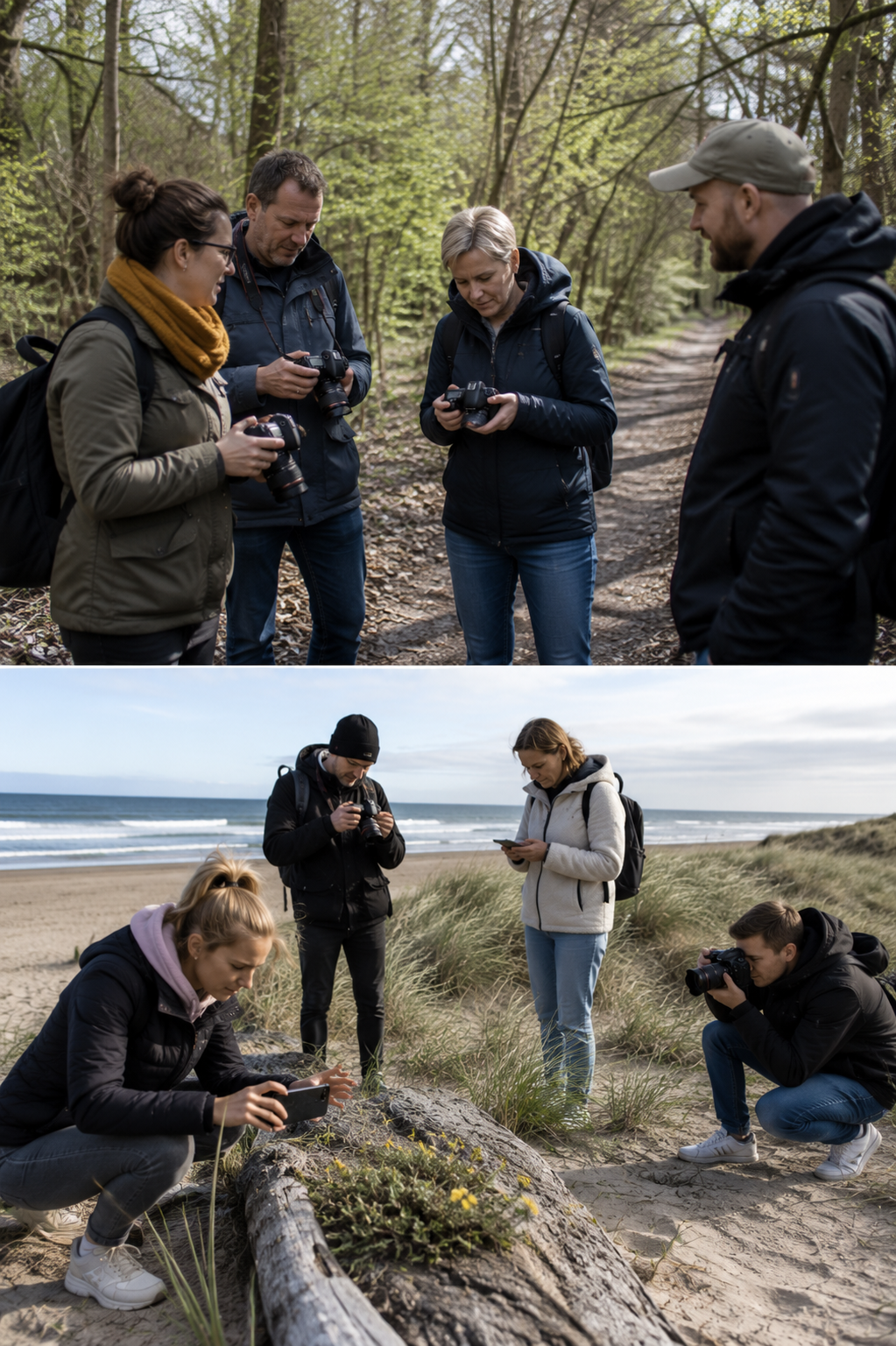
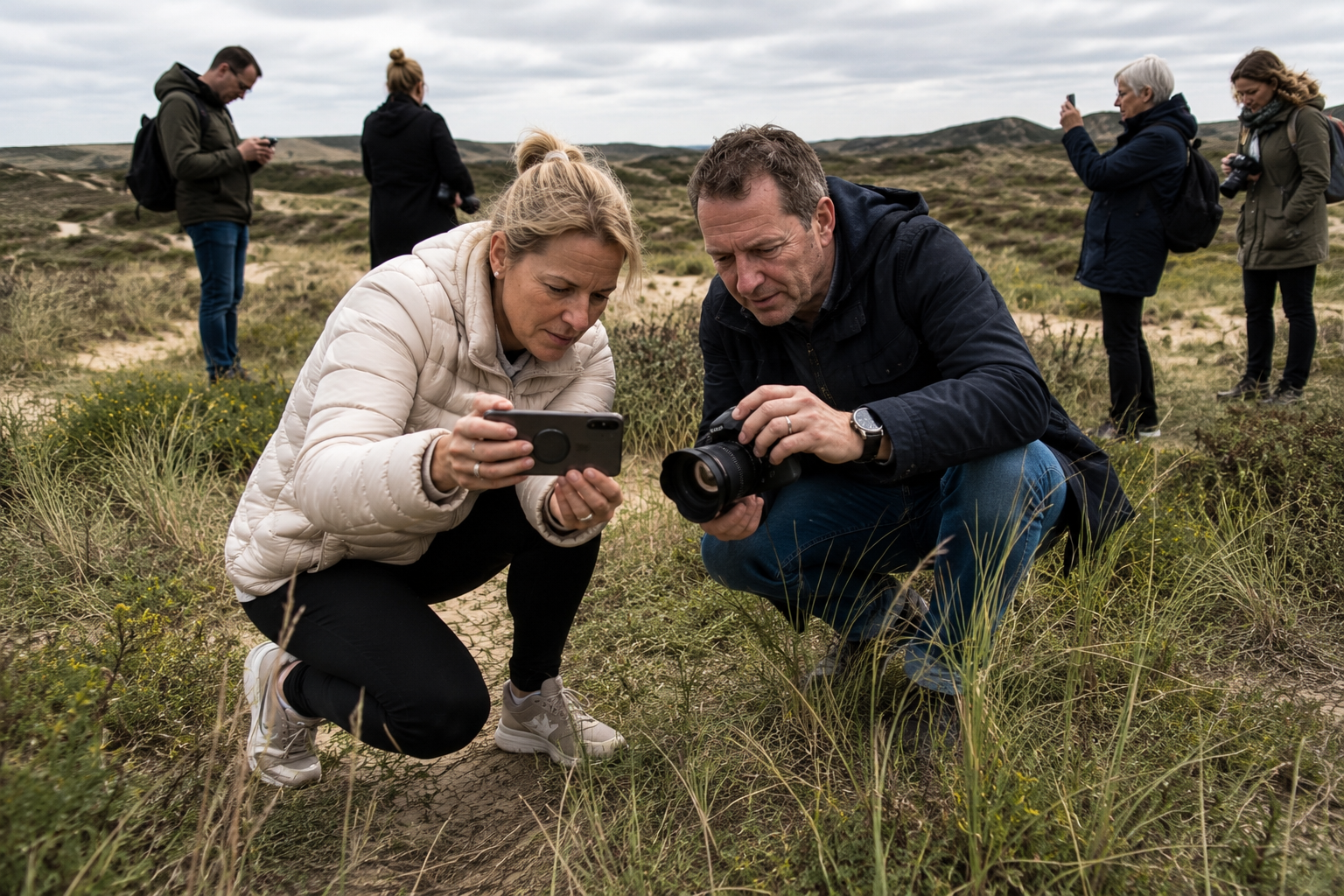
Een team staat op exact dezelfde plek in de Schoorlse Duinen. Iedereen krijgt dezelfde opdracht. Na twintig minuten leggen we de foto's naast elkaar.
Geen enkele foto is hetzelfde. Niet één. Terwijl iedereen naar hetzelfde landschap keek.
Dat is het moment waarop het echte gesprek begint.
Waarom zag jij dit? Waarom liep jij die kant op? Waarom koos jij voor het grote geheel, en jij voor het kleinste detail? Waarom viel jou dit op, en mij helemaal niet?
Wat dit blootlegt over ieder team
Ineens wordt duidelijk wat er op kantoor iedere dag gebeurt: iedereen kijkt door zijn eigen bril. En precies daar ontstaan de meeste misverstanden niet omdat mensen niet willen samenwerken, maar omdat ze aannemen dat een collega hetzelfde ziet als zijzelf.
Dat inzicht, letterlijk zichtbaar gemaakt met twintig verschillende foto's van dezelfde plek, landt anders dan wanneer je het als stelling in een teamvergadering zou presenteren. Mensen zien het bewijs met hun eigen ogen, in hun eigen foto's en die van hun collega's.
Wat deelnemers achteraf zeggen
Na afloop hoor ik regelmatig dit soort reacties:
"Nu snap ik eindelijk waarom jij altijd andere ideeën hebt."
"Ik had nooit door dat jij zo naar details kijkt."
"We werken al jaren samen, en toch heb ik vandaag iets nieuws over je geleerd."
Dat is de opbrengst waar het mee begint: meer begrip voor elkaar, betere communicatie, creatievere oplossingen, snellere besluitvorming en meer vertrouwen binnen het team.
En dat is al een vorm van ROI opzich, ook al staat er geen euroteken voor. Een team dat elkaar beter begrijpt, maakt minder fouten door miscommunicatie. Een team dat van elkaar leert, vindt sneller oplossingen omdat er meer invalshoeken op tafel komen. Een team dat elkaar vertrouwt, hoeft minder tijd te besteden aan controleren, afstemmen en dubbel checken. Dat is rendement het is alleen zichtbaarder in gedrag dan in een rekensom.
De ROI, in cijfers
Zachte voordelen zijn niet minder waardevol, maar een opdrachtgever wil vaak ook een cijfer. Die is er ook.
Stel dat een team van 12 medewerkers, door beter onderling begrip, elk gemiddeld maar 10 minuten per dag minder verliest aan misverstanden, dubbel werk of onduidelijkheid.
Dat is 2 uur per dag, teamwaardig. Ruim 500 uur per jaar.
Geen spectaculaire belofte. Wel een realistisch voorbeeld van wat een kleine gedragsverandering oplevert, tegen de investering van één dag training.
Reken je dat door tegen de gemiddelde uurkosten van een medewerker, dan loopt de teruggewonnen waarde al snel op tot een bedrag dat de investering in de workshop ruimschoots overstijgt vaak al binnen het eerste jaar.
Het gesprek dat pas echt op gang komt bij de borrel
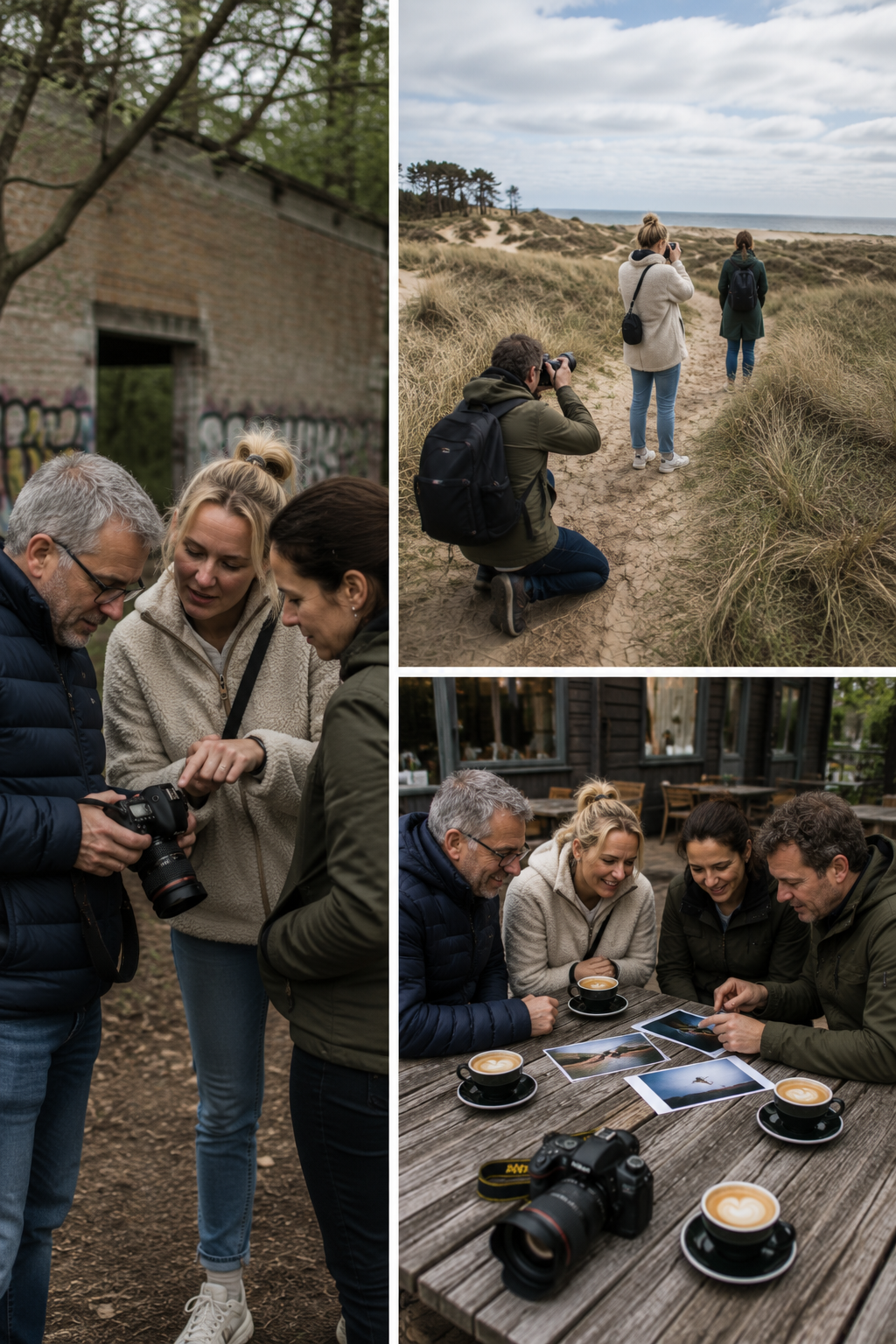
De workshop sluit bijna altijd af met een borrel of diner. En juist daar, met een drankje in de hand en de camera weggelegd, komen de mooiste inzichten los.
Mensen die overdag zakelijk tegenover elkaar staan, praten daar ineens open over waarom ze zagen wat ze zagen. Dat informele moment aan het einde is minstens zo waardevol als de opdracht zelf het is vaak het moment waarop een collega zich voor het eerst in jaren echt gehoord voelt door een ander.
De mooiste reactie kreeg ik ooit van een deelnemer: "Ik dacht dat ik vandaag foto's kwam maken. Ik ging naar huis met een andere manier van kijken."
En misschien is dat precies waar goed teamwork begint. Niet met harder werken. Met anders kijken.
Is dit iets voor jouw team?
Deze workshop past bij teams die verder willen kijken dan het jaarlijkse functioneringsgesprek. Geen droge theorie, geen PowerPoint over communicatie wel een ervaring waarin het inzicht zichtbaar wordt gemaakt in plaats van uitgelegd.
Wil je dit met jouw team ervaren? Stuur een bericht via het contactformulier, of mail naar info@bakkmphotography.nl dan denken we samen na over een programma dat bij jullie team past.