Waarom een dure camera je foto's niet beter maakt (en waarom de mooiste foto's gratis beginnen)
"Als ik straks die nieuwe camera koop, worden mijn foto's eindelijk mooi."
Waarom een dure camera je foto's niet beter maakt (en wat wél het verschil maakt)
"Marcel, als ik straks die nieuwe camera koop, worden mijn foto's eindelijk mooi." Het is misschien wel de meest gehoorde opmerking tijdens mijn Photography Experiences. Ik hoor hem van beginners, maar ook van mensen die al jaren fotograferen. En eerlijk? Ik snap die gedachte heel goed. De fotografie-industrie vertelt ons namelijk al jaren hetzelfde verhaal: meer megapixels, een grotere sensor, betere autofocus en steeds slimmere kunstmatige intelligentie zouden automatisch leiden tot betere foto's. Het lijkt alsof de oplossing altijd één aankoop verder ligt.
Toch zie ik tijdens iedere workshop precies het tegenovergestelde gebeuren. De deelnemer met de nieuwste camera maakt lang niet altijd de mooiste foto. Sterker nog, regelmatig loopt iemand met een eenvoudige smartphone naar huis met het beeld waar de hele groep nog dagen over praat. Niet omdat die telefoon technisch beter is, maar omdat die persoon iets zag wat de rest volledig over het hoofd zagen. En precies daar begint fotografie.
Een camera kan registreren. Jij bent degene die ziet. Dat lijkt een klein verschil, maar het is misschien wel de belangrijkste les die ik de afgelopen dertig jaar heb geleerd. Toen ik zelf begon met fotograferen dacht ik namelijk precies hetzelfde als veel anderen. Ik spaarde voor betere apparatuur, droomde van professionele lenzen en verslond urenlang reviews over de nieuwste camera's. Iedere aankoop voelde als een stap dichter bij betere foto's. Tot ik ontdekte dat mijn foto's wel scherper werden, maar niet interessanter.
De echte verandering kwam pas toen ik minder naar mijn camera begon te kijken en meer naar mijn omgeving. Ik leerde wachten op het juiste licht. Ik ontdekte dat een stap naar links soms meer verschil maakte dan een nieuwe lens van tweeduizend euro. Ik begon me af te vragen waarom ik een foto eigenlijk wilde maken, in plaats van hoe ik hem technisch perfect kon krijgen. Dat veranderde alles. Mijn foto's werden niet beter omdat mijn camera veranderde, maar omdat mijn manier van kijken veranderde.
Ontdek hoe jij anders leert kijken
Leer tijdens mijn Photography Experience waarom niet je camera, maar jouw manier van kijken het verschil maakt.
De grootste misvatting in de fotografie
Toen ik nog in het bedrijfsleven werkte, viel me iets op. We hadden managers met de duurste laptops, de nieuwste telefoons en de meest geavanceerde software. Toch was het niet de technologie die het verschil maakte. Het waren de mensen die de juiste vragen stelden, nieuwsgierig waren en verbanden zagen die anderen misten. Fotografie werkt precies zo. Een camera is een hulpmiddel, geen garantie voor een goede foto.
Toch blijven veel fotografen zoeken naar de volgende aankoop. Ze lezen reviews, vergelijken specificaties en kijken eindeloos naar YouTube-video's waarin wordt uitgelegd waarom de nieuwste camera nóg beter is dan het model van vorig jaar. Ondertussen vergeten ze iets veel belangrijkers: naar buiten gaan en foto's maken.
Ik zeg tijdens mijn workshops weleens gekscherend dat je van het lezen van een handleiding geen betere fotograaf wordt. Dat levert meestal een glimlach op, maar er zit een serieuze boodschap achter. Je leert fotograferen door te kijken, te experimenteren, fouten te maken en opnieuw te proberen. Niet door steeds opnieuw de technische mogelijkheden van een camera te bestuderen.
Wil je dit zelf ervaren?
Ga samen met mij op pad in de Schoorlse Duinen en ontdek hoe kleine veranderingen in licht een wereld van verschil maken.
Het probleem zit meestal niet in je camera
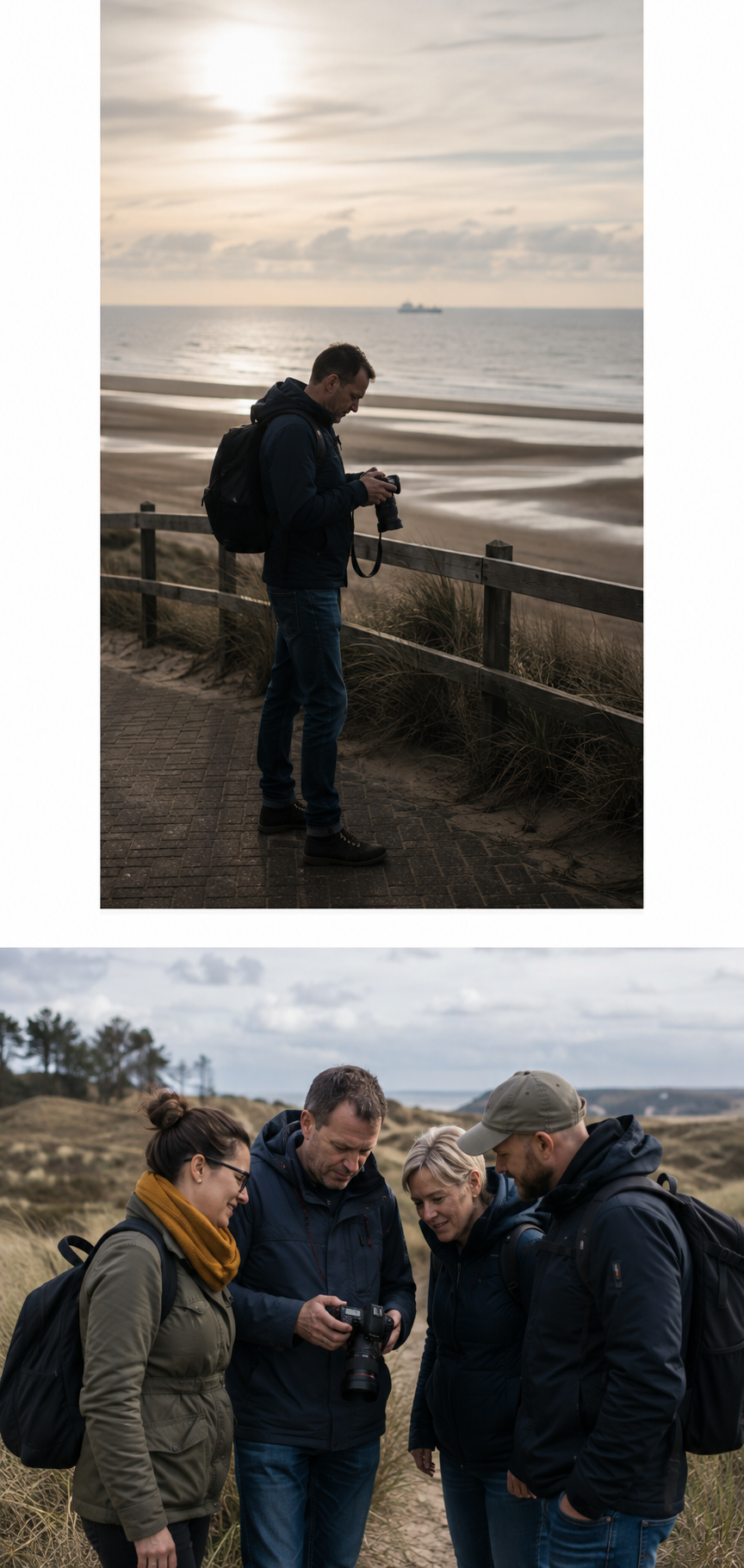
Ik zie het regelmatig gebeuren. Een deelnemer arriveert met een camera waar menig professional jaloers op zou zijn. De nieuwste body, een indrukwekkende lens en een rugzak vol accessoires. Naast hem staat iemand met een eenvoudige systeemcamera van een paar jaar oud of zelfs alleen een smartphone. Aan het einde van de ochtend bekijken we de foto's. Vrijwel altijd ontstaat dezelfde verrassing. Niet de duurste camera heeft de meest indrukwekkende beelden gemaakt, maar degene die het geduld had om te wachten op het juiste moment.
Dat juiste moment laat zich niet afdwingen. Het ontstaat wanneer licht, compositie en timing samenkomen. Een zonnestraal die precies door de mist breekt. Een wandelaar die op het juiste moment een duintop bereikt. Een vogel die nét opvliegt wanneer de lucht goud kleurt. Dat zijn geen instellingen in een menu. Dat zijn momenten die je alleen ziet wanneer je bewust aanwezig bent.
Misschien is dat wel de grootste verandering die fotografie mij persoonlijk heeft gebracht. Ik ben anders gaan kijken, niet alleen door mijn zoeker, maar ook naar de wereld om mij heen. Waar ik vroeger vooral bestemmingen zag, zie ik nu verhalen. Een verweerde deur vertelt iets over de mensen die er jarenlang doorheen zijn gelopen. Een verlaten bankje aan zee roept vragen op. Wie zat hier gisteren? Wie komt hier morgen? Goede fotografie begint niet met antwoorden, maar met nieuwsgierigheid.
Waarom professionals andere foto's maken
Veel mensen denken dat professionele fotografen betere foto's maken omdat ze betere camera's hebben. In werkelijkheid is het meestal precies andersom. Ze kiezen niet voor een bepaald beeld omdat de camera dat kan, maar omdat ze vooraf al weten wat ze willen laten zien.
Dat verschil merk je zodra je naast een ervaren fotograaf loopt. Waar de meeste mensen direct hun camera pakken zodra ze een mooie plek zien, gebeurt er bij een professional vaak iets heel anders. Hij kijkt eerst. Hij loopt een rondje. Hij observeert hoe het licht valt, waar de lijnen naartoe lopen en wat er gebeurt als hij een paar meter naar links of rechts stapt. Pas daarna gaat de camera omhoog.
Tijdens mijn Photography Experiences zie ik dat deelnemers vaak verrast zijn door hoe weinig ik in het begin fotografeer. Soms lopen we tien minuten zonder dat ik één foto maak. Niet omdat er niets te fotograferen is, maar omdat ik nog niet heb gevonden wat ik wil vertellen. Ik ben niet op zoek naar een mooie locatie. Ik ben op zoek naar een beeld dat blijft hangen.
Dat klinkt misschien vreemd, maar probeer het zelf eens. Ga morgen naar een plek waar je al tientallen keren bent geweest. Maak niet meteen een foto. Loop eerst rustig rond. Kijk omhoog, kijk omlaag en draai je eens om. Vraag jezelf af waarom je juist dáár wilt fotograferen. Grote kans dat je een beeld ontdekt dat je anders volledig over het hoofd had gezien.
Professionele fotografen hebben niet per se betere ogen dan jij. Ze hebben zichzelf aangeleerd om langer te kijken. Ze weten dat een kleine verandering in standpunt, een ander moment van de dag of een paar minuten geduld soms meer verschil maakt dan een camera die twee keer zo duur is.
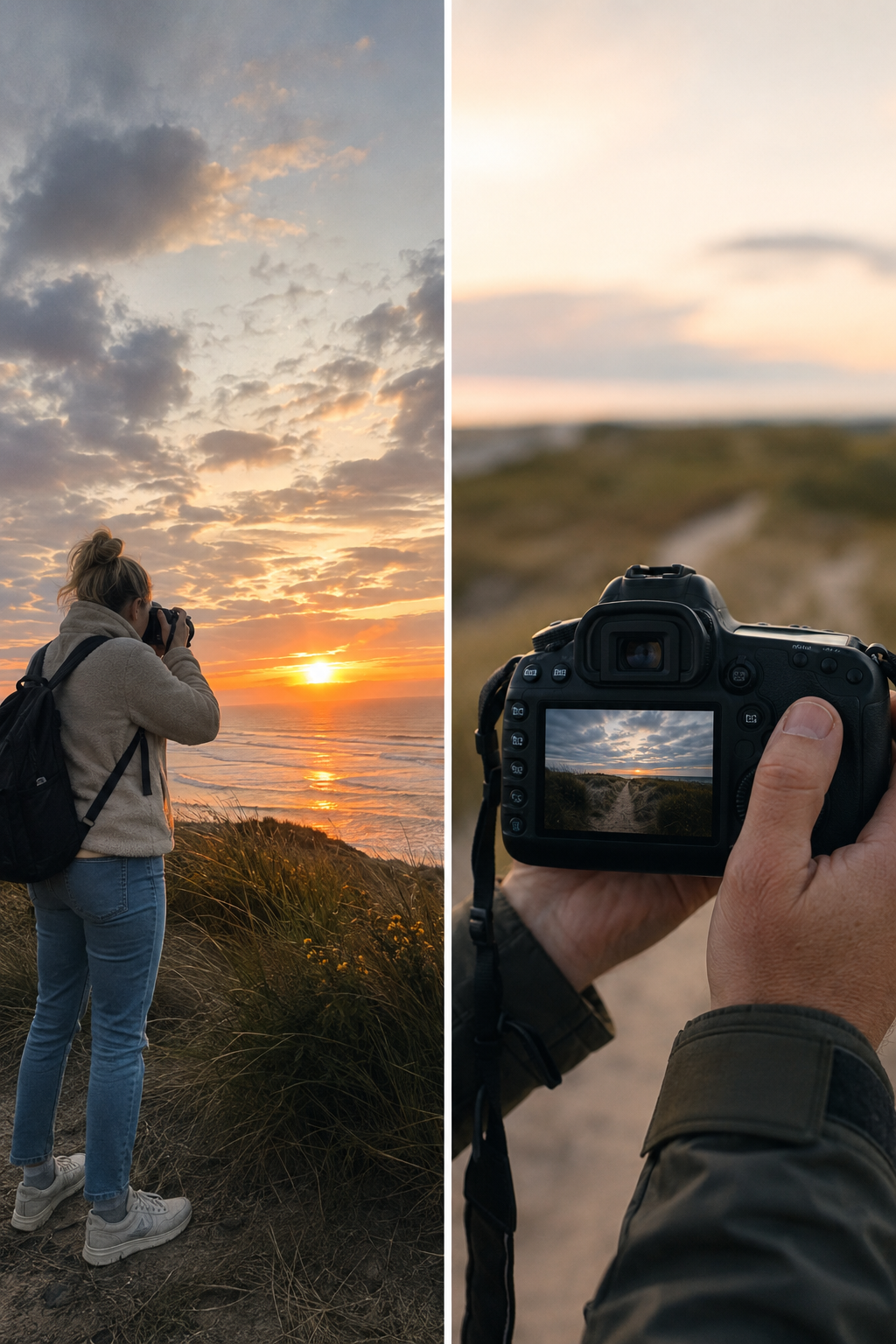
Juist dat geduld zie ik steeds minder om me heen. We leven in een wereld waarin alles snel moet. We maken tientallen foto's, kijken vluchtig naar het schermpje en lopen weer verder. Maar fotografie beloont juist degenen die even blijven staan. Die wachten tot de wind de juiste kant op waait, tot de wolken openbreken of tot die ene wandelaar precies op de juiste plek verschijnt. Soms is de mooiste foto niet degene die je direct maakt, maar degene waar je vijf minuten op hebt gewacht.
En misschien is dat wel de belangrijkste eigenschap van een goede fotograaf: niet technische kennis, maar nieuwsgierigheid. De bereidheid om jezelf steeds opnieuw af te vragen: "Is dit echt de mooiste foto die ik hier kan maken?"
De mooiste foto's beginnen met aandacht
Misschien koop je ooit die camera waar je al zo lang van droomt. Daar is helemaal niets mis mee. Goede apparatuur kan je helpen, meer mogelijkheden geven en in bepaalde situaties echt verschil maken. Maar verwacht niet dat een nieuwe camera je automatisch een betere fotograaf maakt.
De grootste stap maak je niet in de winkel.
Die maak je op het moment dat je besluit bewuster te kijken.
Sta eens wat langer stil. Loop niet meteen door. Vraag jezelf af waarom je juist díe foto wilt maken. Kijk waar het licht vandaan komt. Verander eens van standpunt. Wacht een minuut langer. Of vijf. Je zult merken dat de wereld ineens vol verhalen zit die je eerder niet zag.
Dat is precies waarom ik fotografie zo mooi vind. Het heeft mij niet alleen geleerd betere foto's te maken. Het heeft mij geleerd om met meer aandacht naar de wereld te kijken. Naar mensen. Naar details. Naar momenten die de meeste voorbijlopen.
En misschien is dat wel de grootste winst van fotografie.
Niet dat je met een indrukwekkend beeld thuiskomt.
Maar dat je onderweg anders bent gaan kijken.
Klaar om betere foto's te maken?
Dus voordat je de volgende keer urenlang reviews leest over de nieuwste camera of jezelf afvraagt welke lens je nog mist, stel jezelf eerst één eenvoudige vraag.
Heb ik vandaag écht gekeken?
Want de mooiste foto's beginnen niet met een nieuwe camera. Ze beginnen niet met meer megapixels. Ze beginnen niet met een duurdere lens. Ze beginnen op het moment dat jij besluit om bewuster te kijken. Naar het licht. Naar het verhaal. Naar de details die anderen voorbijlopen.
Dat is de kracht van fotografie. En misschien wel de kracht van anders kijken.
Klaar om zelf anders te leren kijken?
Tijdens een BAKKM Photography Experience ontdek je hoe je met dezelfde camera of smartphone direct betere foto's maakt. Geen technische cursus vol ingewikkelde instellingen, maar een praktische ervaring waarin je leert kijken zoals een fotograaf. Je leert anders kijken, bewuster fotograferen en foto's maken die niet alleen laten zien waar je was, maar vooral vertellen wat je voelde.
Of je nu fotografeert met een smartphone, een systeemcamera of een spiegelreflexcamera, de mooiste foto's beginnen niet bij je apparatuur. Ze beginnen bij jou.
Ben jij klaar om anders te kijken? Bekijk dan de eerstvolgende BAKKM Photography Experience en ontdek hoeveel mooier jouw foto's kunnen worden.